


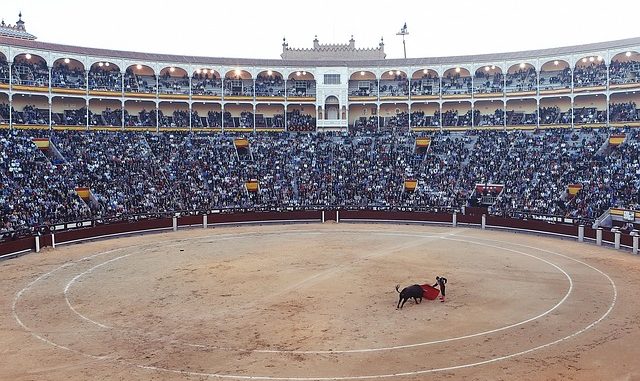
Mexico City’s legislature has taken a significant step toward reducing the harm inflicted on bulls and matadors by passing a measure that bans the use of swords and spades in bullfights. The reform, which animal rights activists have welcomed, aims to modernize the centuries-old tradition while preserving its cultural significance.
Under the new law, bullfighters will no longer be allowed to pierce the animals with sharp weapons, and bulls will have their horns covered to minimize injuries to human participants. The measure, introduced by Mayor Clara Brugada of the Morena party, was approved with an overwhelming majority of 61 votes in favor and only one against.
The decision has sparked a heated debate between supporters of animal welfare and passionate defenders of bullfighting. Outside the legislative building, protesters clashed with police, with some breaking past barriers in an attempt to disrupt the proceedings. Others held signs advocating for more humane treatment of bulls, signaling a growing shift in public sentiment.
The push for reform gained momentum following a recent incident in Tlaxcala, where bullfighter Emilio Macias suffered serious injuries after being gored by a bull. Proponents of the bill argue that the changes will make bullfighting safer for humans while reducing the suffering of animals.
Lawmaker Victor Hugo Romo de Vivar emphasized that the goal was not to ban bullfighting outright but to modernize it in a way that aligns with evolving ethical standards. Mayor Brugada celebrated the bill’s passage on social media, calling it a crucial step toward transforming the capital into a city that respects animal rights and does not tolerate cruelty.
The legislation will officially take effect in 210 days, giving the government time to establish new regulations governing the sport. This move comes as part of a broader trend across Latin America, where bullfighting has faced increasing restrictions. In 2023, Colombia passed a law to phase out the practice by 2027, reflecting a growing regional push against animal cruelty.
Mexico City’s Plaza México, the world’s largest bullring, has long been a symbol of the nation’s deep-rooted bullfighting tradition, which dates back to 1529 during the Spanish conquest. However, shifting public attitudes and legal challenges have placed the practice under greater scrutiny in recent years.
While traditionalists argue that bullfighting is an integral part of Mexican heritage, opponents insist that the spectacle amounts to unnecessary violence against animals. The recent reform represents a compromise, allowing bullfighting to continue while significantly reducing the harm inflicted on the animals involved.
As Mexico City moves toward a more regulated version of bullfighting, the debate over its ethical implications is far from over. However, for animal rights advocates, the new law marks a meaningful step toward a future where tradition and compassion can coexist.
Leave a Reply