


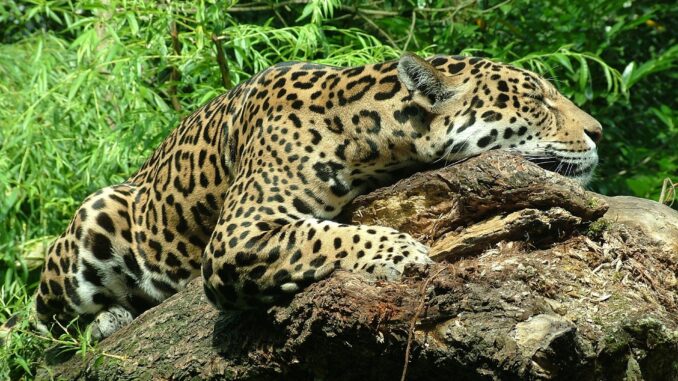
A rare wildlife discovery in Honduras is offering renewed optimism for conservation efforts after a jaguar was recently photographed in the high-altitude forests of the Sierra del Merendón. This marks the first confirmed sighting in the region in ten years, making it a significant moment for scientists and environmentalists alike.
The animal, a young male often referred to as a “cloud jaguar,” was captured on a remote camera trap at an elevation of around 2,200 meters. Jaguars are typically found in lower-altitude habitats, which makes sightings at such heights extremely uncommon. This unusual appearance suggests either a shift in behavior or simply reflects how little is known about wildlife in remote mountain ecosystems.
A Rare Sighting with Big Implications
Across the Americas, jaguar populations have declined sharply. According to the International Union for Conservation of Nature, nearly half of their historical range has already disappeared. While the Amazon region still supports the largest population, other areas face growing threats, placing many jaguar groups at risk.
In Honduras, jaguars are legally protected, yet they continue to struggle against habitat destruction and human activity. Deforestation remains one of the biggest challenges, largely driven by agriculture and livestock expansion. Over the years, this has significantly reduced forest cover and disrupted ecosystems that jaguars depend on.
Conservation Efforts Showing Results
Poaching is another major concern. Jaguars rely on prey such as deer and wild pigs, and illegal hunting of these animals reduces their food supply. Conservation organizations like Panthera have been working to address these issues through stronger monitoring and protection strategies.
The Sierra del Merendón has been protected since the late 1980s due to its importance as a water source for nearby communities. While protection has helped preserve parts of the forest, illegal activities have not completely stopped. In recent years, however, conservation efforts have intensified. These include ranger patrols, camera traps, and acoustic monitoring systems designed to detect illegal activity.
Encouragingly, the region is now showing signs of ecological recovery. Along with the recent jaguar sighting, other wild cats such as pumas and ocelots have also been recorded. This suggests that the habitat is gradually becoming more suitable for large predators again.
The Importance of Wildlife Corridors
Experts believe the jaguar spotted in the mountains may not live there permanently. Instead, it was likely passing through a wildlife corridor connecting populations in Guatemala and Honduras. These corridors are essential for maintaining genetic diversity, allowing animals to move freely between habitats in search of mates and resources.
This corridor forms part of a broader conservation strategy known as the Jaguar Corridor Initiative, which aims to connect jaguar populations from Mexico to Argentina. Protecting these pathways is critical for the long-term survival of the species.
Recent developments beyond Honduras also offer hope. Surveys in Mexico have shown a rise in jaguar numbers, while international cooperation is improving efforts to protect both the animals and their habitats.
The reappearance of a jaguar in the Sierra del Merendón is more than just a rare event. It highlights the positive impact of sustained conservation work. By protecting forests, reducing illegal activities, and maintaining habitat connectivity, there is real potential to secure a future for these powerful and iconic animals.
Leave a Reply