


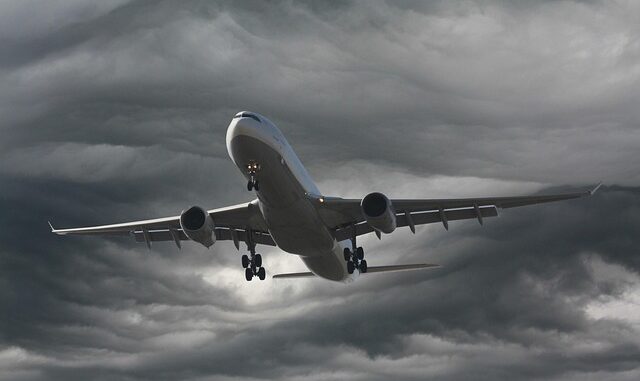
Airlines around the world are quickly addressing a newly identified safety issue affecting thousands of Airbus A320-family aircraft. The manufacturer has warned that intense solar activity, including solar flares, can interfere with critical flight-control systems, potentially causing pilots to lose partial control of the aircraft.
The problem affects Airbus A319, A320, and A321 models—the most widely used single-aisle planes globally. Airbus estimates around 6,000 planes require maintenance to address the issue, though most fixes are expected to be straightforward and completed quickly.
Solar Storms Impact Flight Control Data
The alert follows a serious incident on October 30 involving JetBlue Flight 1230, an Airbus A320 flying from Cancun to Newark. The plane unexpectedly lost altitude mid-flight, prompting an emergency landing in Tampa, Florida. Fifteen passengers were treated for minor injuries. Airbus investigated the event and determined that unusually strong solar radiation may have corrupted onboard flight-control data, affecting the aircraft’s fly-by-wire system.
In response, Airbus issued an urgent advisory to operators, instructing them to revert to previous software versions on most affected aircraft. The software rollback typically takes about two hours per plane, allowing airlines to continue operations with minimal disruption. However, older planes—around 900 in total—require hardware upgrades, which take longer to complete.
Airlines Work Around the Clock to Complete Updates
Despite the scale of the problem, airlines have largely avoided major operational disruptions. Flight boards at key airports—including Atlanta, Dallas-Fort Worth, Dubai, London Heathrow, and Tokyo Haneda—showed that most flights continued on schedule with only minor delays.
American Airlines reported that it had updated all but four of its 209 affected planes, fewer than initially projected. Delta Air Lines said fewer than 50 of its A321neo aircraft required fixes and expected the work to be finished quickly. United Airlines confirmed six planes needed updates, with only minimal impact on its flight schedule. JetBlue, whose fleet is predominantly A320 and A321 aircraft, began repairs immediately and advised passengers to check flight statuses via its app or website.
Global Impact and Precautionary Measures
In the Asia-Pacific region, Jetstar Airways and Air New Zealand took proactive steps to update their fleets. Jetstar confirmed 34 of its 85 A320s were affected, resulting in roughly 90 flight cancellations, with more expected through the weekend. Indian carriers IndiGo and Air India Express also moved swiftly, planning to complete maintenance by Saturday.
European airlines—including Lufthansa, EasyJet, Wizz Air, Aer Lingus, and British Airways—acknowledged that some aircraft were impacted, though the effect on operations was minor. Even the Vatican’s papal plane, known as “Shepherd One,” required updates, which were completed in time for the Pope’s trip to Turkey and Lebanon.
Airbus, together with the European Aviation Safety Authority, has instructed airlines not to operate affected planes with passengers until the necessary updates are completed. The manufacturer emphasized that passenger safety is the top priority, and the rapid industry response highlights aviation’s strong safety culture.
Looking Ahead
Most airlines are expected to complete software updates quickly, minimizing disruptions during a busy travel period. Older planes requiring hardware changes will take longer to repair, but overall, the aviation industry’s coordinated effort demonstrates how safety protocols and rapid responses can prevent potential disasters before they escalate.
Leave a Reply