


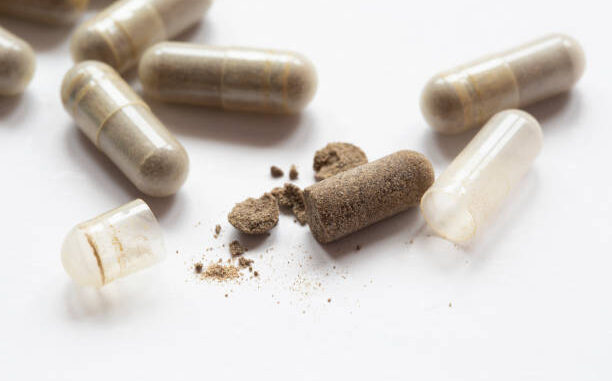
Federal agencies are moving to classify a powerful kratom-derived compound, 7-hydroxymitragynine (7-OH), as a Schedule I drug — the most restricted category — due to growing concerns over its potential for abuse, overdose, and misuse.
The move, announced Tuesday by the Department of Health and Human Services (HHS) and the Department of Justice, specifically targets synthetic and highly concentrated 7-OH found in popular consumer products like gummies, capsules, and energy drinks. This action does not apply to the natural kratom leaf or powder form.
What Is 7-OH and Why the Concern?
7-OH is a naturally occurring alkaloid found in kratom, a tropical plant native to Southeast Asia. Traditionally used for its stimulant and pain-relieving effects, kratom has recently gained traction in the U.S., particularly among individuals seeking alternatives for pain management or opioid withdrawal.
While 7-OH exists only in trace amounts in the natural leaf, manufacturers have begun extracting and concentrating it, creating semi-synthetic products with far more potent — and potentially dangerous — effects. These concentrated forms, often sold in gas stations and smoke shops, have been linked to a sharp increase in poisonings, emergency room visits, and reports of dependency, according to HHS.
“Not the Leaf — the Synthetic Killer”
FDA Commissioner Dr. Marty Makary clarified during Tuesday’s briefing that the government’s action is targeted: “We are not going after ground-up kratom. We are going after the concentrated synthetic byproduct that behaves like a full opioid.”
Makary recommended that 7-OH be scheduled alongside substances like heroin and LSD — compounds with no approved medical use and a high risk of addiction. Natural kratom, in contrast, remains unregulated but under continued scrutiny.
Health Risks vs. Regulation Gaps
Though exact data on overdose rates from 7-OH are lacking — partly due to low physician awareness of the compound — officials say its addictive nature, paired with unregulated access, poses a growing public health threat.
Deputy HHS Secretary Jim O’Neill emphasized the dangers: “This substance is being sold with no dosage control, no warnings, and no restrictions — it’s a recipe for disaster.”
The FDA recently issued warning letters to seven companies illegally marketing products containing 7-OH, reiterating that the substance is not approved for dietary supplements or food. However, enforcement remains challenging, as these products continue to appear on convenience store shelves.
Debate Over Kratom’s Place in Medicine
Despite government concerns, advocates argue that natural kratom has helped thousands of people safely manage chronic pain and opioid withdrawal. At the HHS event, chronic pain advocate Melody Woolf said, “It was kratom only, the powdered leaf, that saved my life. And now I’m seeing something very dangerous happen: 7-OH is being sold over the counter.”
Meanwhile, critics warn that the distinction between natural and synthetic kratom is not always clear — and that a lack of public education is contributing to misinformation and misuse.
Public Pushback and Future Outlook
The Holistic Alternative Recovery Trust challenged the federal decision, saying officials failed to provide concrete evidence linking 7-OH to deaths or serious long-term harm. “Cutting off access helps no one, but it will hurt many,” said the group’s national policy director Jeff Smith.
As debates continue, health officials say more research is needed. While synthetic kratom extracts face increased regulation, the future of the natural leaf remains uncertain.
Leave a Reply