


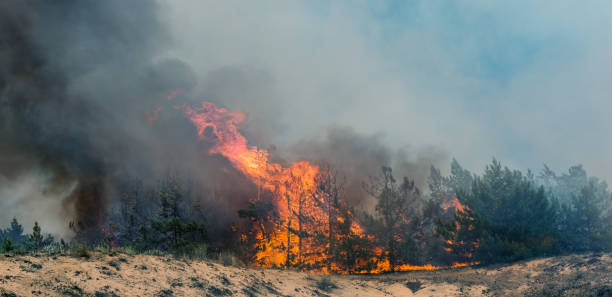
A series of relentless wildfires are tearing through Russia’s Siberian forests, with local authorities reporting that more than 600,000 hectares have already been scorched. The most affected area, Zabaykalsky Krai, has been under a federal-level state of emergency since late April due to the growing severity of the situation.
Located in Eastern Siberia and bordering Mongolia, Zabaykalsky Krai continues to battle 49 active wildfires, according to a Wednesday update from Russia’s Ministry of Emergency Situations. These fires now cover over 629,000 hectares, making it one of the most extensive wildfire events in the region’s recent history.
Data from the Federal Agency for Forestry released Tuesday revealed that over 1.4 million hectares of land have been burned since the start of the year—an area nearly three times the size of all wildfire damage reported this year in both the United States and Canada combined.
Smoke from these fires has blanketed vast distances, with satellite images from Copernicus, Europe’s climate monitoring program, predicting that it will reach Beijing and the Korean Peninsula by the weekend.
Other regions across Russia’s far east are also struggling to contain the growing crisis. In Buryatia, a republic bordering Mongolia, a regional emergency was declared on Tuesday. Local authorities shut down public access to forests in an attempt to prevent further outbreaks.
Since mid-March, Buryatia has experienced 174 wildfires, with the regional forestry service attributing around 90% of these to negligent human behavior. Despite the efforts of over 530 firefighters, 22 fires remained active in the area as of Tuesday, according to regional reports.
What makes this wildfire season particularly alarming is its early onset. While large-scale forest fires in Siberia typically begin in May, this year’s blazes started appearing in mid-March. Experts point to a combination of unusually dry conditions and rising temperatures—both consequences of climate change—as major contributing factors.
These extreme weather conditions have created perfect fuel for rapid fire spread. Drought-stricken vegetation, intense heat, and shifting winds are all accelerating the destruction. Environmental scientists warn that such events may become more frequent and intense as the climate crisis deepens.
So far in 2025, more than 2,100 forest fires have been logged across Russia, according to the Federal Aerial Forest Protection Service. The environmental toll is staggering—not only in terms of carbon emissions and habitat loss but also in the long-term impact on air quality and human health.
Despite firefighting efforts on the ground and in the air, containment remains a challenge. Access to remote forested areas is limited, and extreme conditions often hinder suppression activities.
Authorities are urging residents to exercise caution and follow all safety directives. Public campaigns have been launched to educate communities about fire prevention and the dangers of open flames in forested zones.
The scale and frequency of wildfires across Siberia underscore a growing global issue: the intersection of climate change and human behavior. Without strategic prevention measures and stronger environmental regulations, such devastating events may become an annual norm, threatening ecosystems, communities, and climate stability alike.
Leave a Reply