


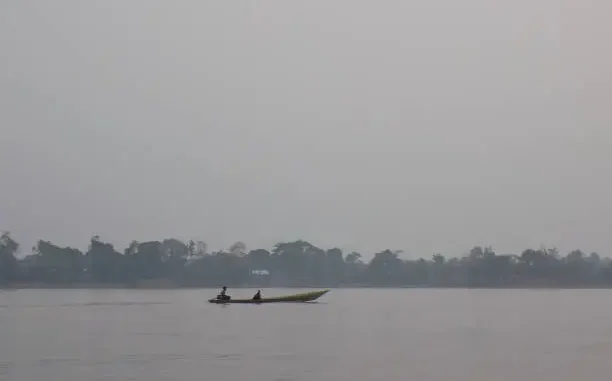
For decades, the Marañón River—a vital lifeline stretching over 900 miles through Peru’s tropical rainforests—has endured repeated oil spills that have harmed both the environment and indigenous communities. However, in a historic shift, the river now holds legal personhood status, offering new hope for its protection.
One of the most significant incidents occurred in 2000, when a barge spilled over 5,000 barrels of crude oil into the Marañón, coating the waterway in a slick black film and devastating the surrounding ecosystem. This event, among many others, has had long-lasting effects on wildlife and people living along the riverbanks.
The river’s path, beginning in the Andes and merging into the Amazon, runs parallel to the Northern Peruvian Oil Pipeline (ONP). Between 1997 and 2022, more than 80 oil spills have occurred along this route, according to Peru’s energy and mining authority. The frequency of spills has made pollution an ongoing threat to the region.
For Mari Luz Canaquiri Murayari, a member of the Kukama indigenous community, witnessing these disasters sparked a lifelong mission. In response to the environmental damage, she founded the Asociación de Mujeres Huaynakana Kamatahuara Kana (HKK), an organization led by women focused on defending the river.
After years of activism, the group achieved a major legal milestone in March 2024 when a Peruvian federal court recognized the Marañón River as a legal entity. This ruling grants the river the right to remain free-flowing and protected from contamination. The decision also formally recognizes indigenous groups like the Kukama as its legal guardians, allowing them to represent the river’s interests in court.
Canaquiri Murayari, now in her 50s, was recently honored with the prestigious Goldman Environmental Prize for her role in the campaign. She explained that for the Kukama people, the river is not just water—it is sacred. They believe ancestral spirits reside beneath its surface, and any harm done to the river is seen as harm to their heritage.
Oil pollution has not only killed fish and other river life but has also disrupted the Kukama’s daily life. With no alternative water sources, residents have continued to consume water and fish from the river, despite the health risks. Studies have revealed high levels of toxic metals like lead and mercury in local populations living near oil spill sites.
Despite protests, petitions, and marches in the regional capital of Iquitos, the community struggled for years to gain traction. That changed in 2014 when HKK partnered with the Legal Defense Institute (IDL) and Earth Law Center, eventually filing a lawsuit for the river’s legal personhood. The case drew inspiration from other rivers globally—like New Zealand’s Whanganui and Colombia’s Atrato—that had been granted similar legal protections.
While the new ruling doesn’t halt oil extraction immediately, it enables indigenous advocates to challenge future harmful projects. The court has also ordered Petroperú, the state-owned oil company, to create a clean-up and protection plan for the river.
Environmental policy experts call this a groundbreaking case in Peru, with the potential to influence similar efforts across Latin America. Canaquiri Murayari remains hopeful that this ruling is just the beginning. As a mother and grandmother, she believes the fight is for future generations.
“We must protect our rivers not just for ourselves, but for the children of the world,” she says.
Leave a Reply