


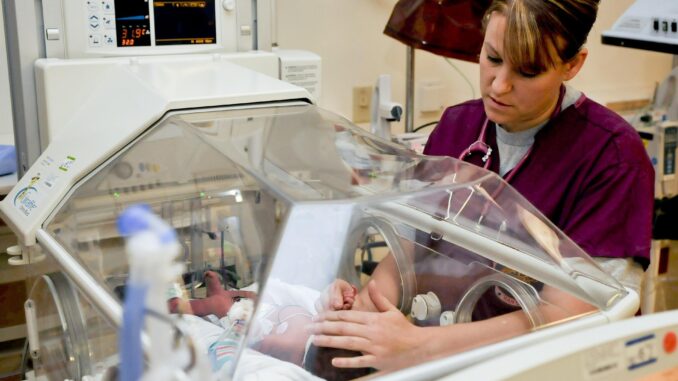
For parents of premature babies, the first opportunity to hold their newborn can be an emotional milestone. However, infants born weeks before their due dates may require specialized medical support that makes physical contact difficult during the earliest days of life. A new medical device called the Skincubator is being studied as a way to make this experience possible sooner.
The technology is designed to help medically fragile newborns receive skin-to-skin contact while maintaining the support they need in a hospital’s neonatal intensive care unit (NICU).
How the Skincubator Works
Traditional incubators provide a controlled environment that helps premature infants maintain their body temperature and receive necessary medical care. Babies may also depend on breathing support, tubes, and monitoring equipment, making transfers between their incubators and caregivers more complicated.
The Skincubator is designed to simplify this process. It uses a specialized wearable system that secures the infant and accommodates medical lines and breathing support while the baby rests against a parent’s chest.
A retractable support pad helps transfer the infant into a skin-to-skin position without requiring the baby to leave the protective environment of the device. This approach aims to make holding premature newborns more manageable for families and medical staff.
Children’s Memorial Hermann Hospital in Houston became the first hospital in the United States to introduce the device as part of a clinical trial in 2026.
Why Skin-to-Skin Contact Matters
Skin-to-skin care, sometimes called kangaroo care, involves placing a newborn directly against a caregiver’s bare chest. This practice is particularly valuable for premature infants because it can support several aspects of their early development.
Research has associated skin-to-skin contact with improved temperature regulation, more stable breathing and heart rates, better sleep, and stronger parent-infant bonding. It may also help regulate stress responses and support breastfeeding.
However, providing this care to extremely premature infants can be challenging when they require extensive medical equipment or close monitoring.
The Skincubator aims to reduce some of these practical barriers, potentially allowing families to spend more time holding their babies during a critical stage of development.
A New Experience for Parents of Premature Infants
The emotional impact of premature birth can extend beyond medical concerns. Parents may spend days or weeks watching their newborn through an incubator while waiting for an opportunity to hold them safely.
For families participating in the Houston clinical trial, the device has offered an opportunity to establish physical contact earlier than they otherwise could. The experience may help parents feel more connected to their babies and more involved in their care.
The Skincubator is also designed to make longer periods of skin-to-skin care more practical. Its ability to accommodate medical equipment may reduce some of the difficulties associated with transferring fragile infants.
What Comes Next for the Skincubator?
Although the technology offers encouraging possibilities, further research is needed to establish its safety, effectiveness, and potential benefits across different groups of premature infants.
Researchers are examining whether the device can help increase skin-to-skin care while maintaining appropriate temperature and humidity levels. A clinical study at UTHealth Houston is also evaluating the amount of skin-to-skin contact infants receive and parental stress during NICU care.
If future studies support its use, the Skincubator could become a valuable option for hospitals caring for medically fragile newborns.
The goal is not to replace essential intensive care but to make room for an important part of early life: the physical connection between parents and their babies.
Leave a Reply