


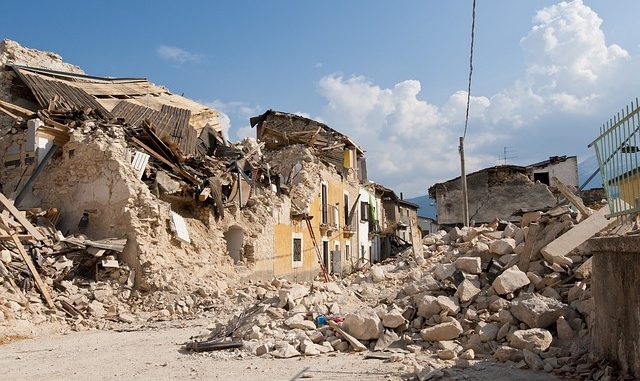
A powerful earthquake has struck central Myanmar, dealing a devastating blow to a country already reeling from years of civil war and economic collapse. The disaster, which hit near the historic city of Mandalay on Friday, has killed at least 1,000 people, though experts fear the final death toll could be far higher. With infrastructure crippled by ongoing conflict, rescue efforts are severely hampered, leaving survivors desperate for aid.
A Nation Struggling Amidst War and Disaster
Myanmar has been engulfed in chaos since the military seized power in a 2021 coup, sparking widespread resistance and brutal crackdowns. The resulting civil war has left transportation and communication networks in ruins, making it nearly impossible to fully assess the Myanmar earthquake’s destruction. The quake, with a magnitude of 7.7, struck near Mandalay—a densely populated cultural hub—sending tremors across the region.
Eyewitnesses described buildings collapsing within seconds, burying people under rubble. Mosques, monasteries, and homes crumbled, with some structures reduced to piles of debris. A geologist compared the quake’s force to hundreds of atomic explosions, underscoring its catastrophic impact.
Survivors Face Desperation and Loss
In Mandalay, a mother recounted narrowly escaping death when her house partially collapsed. “I was making milk for my baby when the walls started shaking,” she said. “My grandmother was trapped under the wreckage—we barely got her out alive.” Others were not as fortunate. A former lawyer in the city revealed that three of his relatives had been killed, their bodies still unrecovered days later.
Nearby, in the rural Sagaing region, a nunnery collapsed, injuring several young students. “An 11-year-old girl lost three toes, and another nun suffered a fractured skull,” said a relative of one victim. Overwhelmed hospitals turned away the injured, leaving many without proper medical care.
Military Junta Breaks Tradition, Seeks Foreign Help
Myanmar’s military rulers have historically rejected international aid, but this time, facing an unprecedented disaster, junta leader Min Aung Hlaing has urgently requested assistance. Neighboring countries, including China, India, and Singapore, have begun sending rescue teams and supplies. However, reaching affected areas remains a challenge due to damaged roads and ongoing conflict.
For survivors, the wait for help has been agonizing. “Every minute feels like an eternity,” said one Mandalay resident searching for missing loved ones. With limited food, water, and medical supplies, many fear the worst is yet to come.
A Long Road to Recovery
As Myanmar confronts this latest tragedy, the international community faces difficult questions about how to deliver aid effectively in a country torn apart by war. For now, thousands remain trapped under rubble, injured, or homeless—caught between natural disaster and man-made suffering. Without swift intervention, the death toll will continue to rise, deepening what was already one of the world’s most dire humanitarian crises.
Leave a Reply